




Pallets are often viewed as a basic logistics component, yet they play a critical role in the efficiency, safety, and cost structure of storage and material-handling operations. The right pallet type supports smooth movement of goods, protects products, and integrates seamlessly with handling equipment.
The wrong pallet, however, can lead to product damage, workflow disruptions, safety risks, and unnecessary operational costs.
Choosing the right pallet type is not a one-size-fits-all decision. It requires a clear understanding of your storage and handling workflow, the loads you move, the environments you operate in, and the long-term costs associated with pallet use, including whether new or second-hand pallets are the most practical and cost-effective option for your operations.
This article provides a comprehensive guide to help you select the most suitable pallet type for your operation.
Why Pallet Selection Matters in Storage and Handling Operations
How Pallets Affect Efficiency, Safety, and Costs
Pallets are at the foundation of most material-handling systems. Every movement—whether by forklift, pallet jack, conveyor, or automated system—depends on pallet performance. Proper pallet selection improves:
- Handling efficiency and speed
- Load stability during transport and storage
- Worker safety by reducing pallet failures
- Equipment compatibility and uptime
Conversely, poorly chosen pallets can cause misalignment, breakage, and repeated handling errors that slow operations and increase costs.
The Hidden Risks of Using the Wrong Pallet Type
Using an unsuitable pallet type can introduce risks that are not always immediately visible. These include:
- Product damage due to insufficient load capacity
- Workplace accidents caused by cracked or unstable pallets
- Downtime in automated systems due to inconsistent pallet dimensions
- Non-compliance with hygiene or export regulations
Over time, these risks translate into higher operating expenses and reputational damage.
Pallets as a Critical Component of Material Handling Systems
Pallets should be considered part of the overall material-handling system rather than a standalone item. Their design and performance affect storage density, equipment wear, and workflow continuity. Selecting the right pallet ensures the entire system operates as intended.
Understanding the Role of Pallets in Your Workflow
Storage, Transport, and Handling Requirements
Before choosing a pallet type, it is essential to map how pallets move through your operation. Consider:
- Storage methods (racking, floor stacking, block stacking)
- Internal handling frequency
- Transportation distances and conditions
Different workflows demand different pallet characteristics, such as stiffness, durability, and load distribution.
Manual vs Mechanized vs Automated Handling Environments
Manual handling environments often tolerate a wider range of pallet types. Mechanized and automated systems, however, require pallets with consistent dimensions and predictable performance. Automated storage and retrieval systems (AS/RS) and conveyor systems are particularly sensitive to pallet quality.
Integration With Forklifts, Pallet Jacks, and Conveyors
Pallet Up design must match the handling equipment used. Entry points, deck configuration, and pallet weight all influence compatibility with forklifts, pallet jacks, and conveyors. Misalignment between pallets and equipment increases handling time and equipment wear.
Key Factors to Consider When Choosing a Pallet Type
Load Capacity and Weight Distribution
Understanding both static and dynamic load requirements is critical. Pallets must support:
- Static loads during storage
- Dynamic loads during movement
Uneven weight distribution can cause pallet deformation or failure, especially in racking systems.
Durability and Lifespan
Pallet lifespan directly impacts total cost of ownership. More durable pallets typically have higher upfront costs but lower replacement and maintenance expenses over time.
Hygiene and Cleanliness Requirements
Industries such as food, pharmaceuticals, and chemicals require pallets that are easy to clean and resistant to contamination. In such environments, hygiene often outweighs initial cost considerations.
Environmental Conditions
Pallets may be exposed to:
- Moisture and humidity
- Extreme temperatures
- Chemicals or corrosive substances
Environmental conditions influence material choice and pallet design.
Industry Compliance and Regulations
Export operations and regulated industries require pallets that meet specific standards. Compliance failures can result in shipment delays or rejected goods.
Common Types of Pallets and Their Use Cases
Wooden Pallets: Advantages, Limitations, and Applications
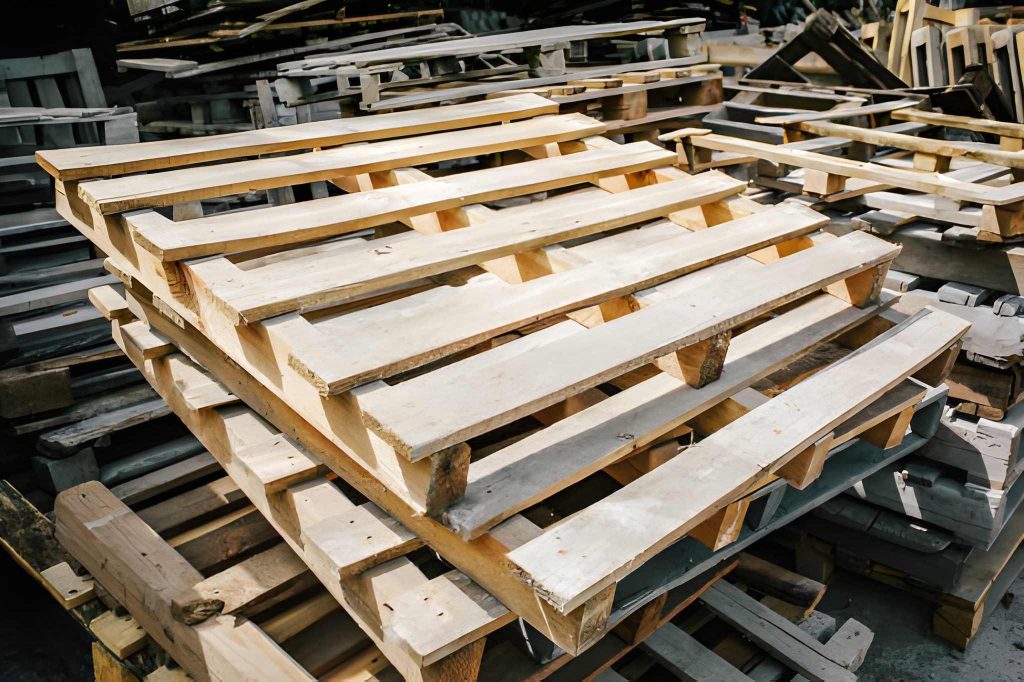
Wooden pallets are widely used due to their low cost and availability. They offer good load-bearing capacity and are easy to repair. However, they are susceptible to moisture damage, splintering, and hygiene concerns.
Plastic Pallets: When Hygiene and Consistency Matter
Plastic pallets provide consistent dimensions, smooth surfaces, and resistance to moisture and chemicals. They are ideal for hygiene-sensitive environments and automated systems, though they typically involve higher upfront costs.
Metal Pallets: Heavy-Duty and Long-Term Use Cases
Metal pallets are designed for extreme loads and harsh environments. They are commonly used in automotive, metal processing, and heavy manufacturing sectors. Their durability makes them suitable for long-term, closed-loop systems.
Composite and Engineered Pallets
Composite pallets combine materials such as wood and plastic to balance durability, weight, and cost. They are often designed to meet specific performance requirements.
Export Pallets and ISPM-15 Compliance
For international shipping, wooden pallets must meet ISPM-15 standards. Alternatively, plastic and composite pallets eliminate the need for heat treatment and certification.
Pallet Selection Based on Industry Requirements
Pallets for Warehousing and Distribution Centers
Distribution centers require pallets that support high throughput, compatibility with racking systems, and repeated handling. Durability and consistency are key considerations.
Pallets for Manufacturing and Industrial Environments
Manufacturing environments often expose pallets to heavy loads and rough handling. Pallets must withstand impact, vibration, and extended use without failure.
Pallets for Food, Pharma, and Hygiene-Sensitive Sectors
In regulated industries, pallets must be easy to clean, non-porous, and resistant to contamination. Plastic and metal pallets are commonly preferred.
Pallets for Cold Storage and Temperature-Controlled Facilities
Cold storage environments demand pallets that maintain structural integrity at low temperatures and resist moisture absorption.
Choosing Pallets for Automated and High-Throughput Systems
Pallet Consistency and Dimensional Accuracy
Automation requires pallets with precise and consistent dimensions. Even minor variations can cause system errors and downtime.
Compatibility With AS/RS and Conveyor Systems
Pallets used in automated systems must meet specific design criteria, including deck spacing and load stability, to function reliably.
Impact of Pallet Quality on Automation Downtime
Inferior pallet quality can lead to jams, misalignment, and equipment damage. Investing in higher-quality pallets reduces downtime and maintenance costs.
Cost Considerations and Total Cost of Ownership (TCO)
Upfront Pallet Costs vs Long-Term Value
Initial pallet price should be evaluated alongside lifespan, repairability, and operational efficiency. A lower-cost pallet may be more expensive over time.
Repair, Maintenance, and Replacement Costs
Some pallet types are easily repairable, while others are designed for long-term use without maintenance. Understanding these costs supports better budgeting decisions.
Reusable, Recyclable, and Sustainable Options
Reusable pallets reduce waste and long-term costs. Recyclable materials support sustainability goals and regulatory compliance.
Sustainability and Environmental Impact of Pallet Choices
Recyclability and Reuse Potential
Pallets with high reuse potential reduce environmental impact and disposal costs. Closed-loop systems are particularly effective in improving sustainability.
Carbon Footprint of Different Pallet Materials
Material selection influences carbon emissions across manufacturing, transport, and end-of-life stages. Sustainable pallet strategies consider the entire lifecycle.
Aligning Pallet Selection With Sustainability Goals
Many organizations now factor environmental performance into procurement decisions, and pallet choice can play a key role in supporting broader ESG objectives. To explore sustainable pallet options that align with your storage and handling needs, contact us today.
Common Mistakes to Avoid When Selecting Pallets
Choosing Pallets Based on Price Alone
Focusing solely on upfront cost often leads to higher long-term expenses and operational disruptions.
Ignoring Handling and Storage Environment
Pallets must be matched to the actual conditions they will face. Environmental mismatch is a common source of pallet failure.
Overlooking Compliance and Export Regulations
Failure to meet regulatory requirements can result in shipment delays and additional costs.
How to Evaluate and Test the Right Pallet for Your Workflow
Conducting Load and Stress Testing
Testing pallets under real load conditions provides insight into performance and durability.
Pilot Testing Pallets in Live Operations
Running a pilot program allows teams to identify potential issues before full-scale implementation.
Working With Pallet Manufacturers and Suppliers
Collaborating with experienced suppliers helps ensure pallets are tailored to operational needs and compliance requirements.
Frequently Asked Questions (FAQs)
What Is the Best Pallet Type for Warehouse Storage?
The best pallet type depends on load requirements, storage method, and handling equipment. Consistency and durability are key for racked storage systems.
Are Plastic Pallets Better Than Wooden Pallets?
Plastic pallets offer advantages in hygiene and consistency, while wooden pallets are more cost-effective. The right choice depends on operational priorities.
Which Pallets Are Suitable for Automation Systems?
Automated systems require pallets with consistent dimensions, high durability, and precise design specifications.
What Pallets Are Required for Export Shipping?
Export shipping often requires ISPM-15-compliant wooden pallets or alternative materials such as plastic or composite pallets.
How Do I Calculate the Right Pallet Load Capacity?
Load capacity calculations should consider static, dynamic, and racking loads, as well as weight distribution.
Conclusion: Selecting the Right Pallet for Long-Term Efficiency
Choosing the right pallet type is a strategic decision that affects efficiency, safety, compliance, and cost control across your storage and handling workflow. By understanding operational requirements, evaluating pallet materials and designs, and considering long-term ownership costs, organizations can select pallets that support reliable, efficient operations.
A well-chosen pallet is not just a handling aid—it is a foundational element of a resilient and scalable logistics system. When pallets are aligned with workflow demands and business goals, they contribute directly to smoother operations and sustainable growth.